There are opportunities that arrive at exactly the right moment. The Africa-Europe Partnerships for Culture: Sub-Saharan Africa, Connect and Create mobility grant was one of those for me.
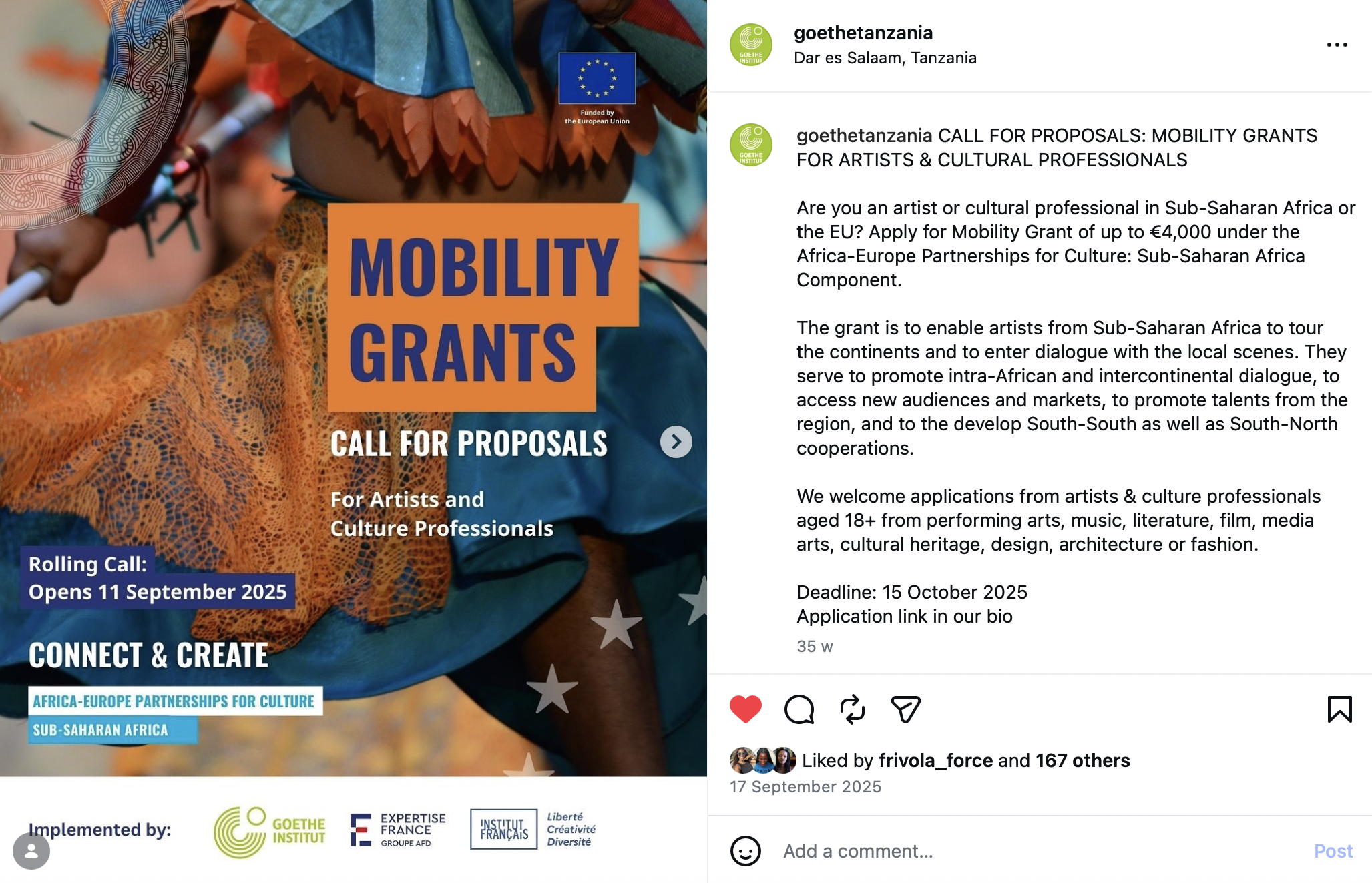
Instagram posted by Goethe Insitute Tanzania
How It All Began
When I first received the news that I would be joining the Tanzanian Pavilion team at the 61st International Art Exhibition of La Biennale di Venezia, I did not hesitate for a single moment. The opportunity to work as Assistant Curator on Tanzania's second national pavilion at Venice felt like a significant leap forward in my curatorial career, and I jumped at it with everything I had.
But from the very beginning, we faced the challenge that shadows so much of what we do as cultural practitioners on the African continent: funding. The Tanzanian Pavilion, like many African national pavilions, was navigating significant financial pressures, and I was acutely aware that my own participation, travel, accommodation, and day-to-day costs in Venice, would need to be figured out independently of the pavilion's already stretched resources.
It was in that context that I came across the mobility grant. The moment I saw that it was open and that I was eligible, both in terms of my location in Sub-Saharan Africa and the nature of my curatorial practice, I applied immediately. I also encouraged two other Tanzanian artists to apply, hoping that the grant could help ease some of the financial pressure around participation more broadly. For me, this was never about being paid. It was about learning. It was about being present. It was about finally getting to experience the Venice Biennale, which had lived in my imagination as a kind of north star ever since I began my curatorial practice in 2015.
The Moment I Found Out
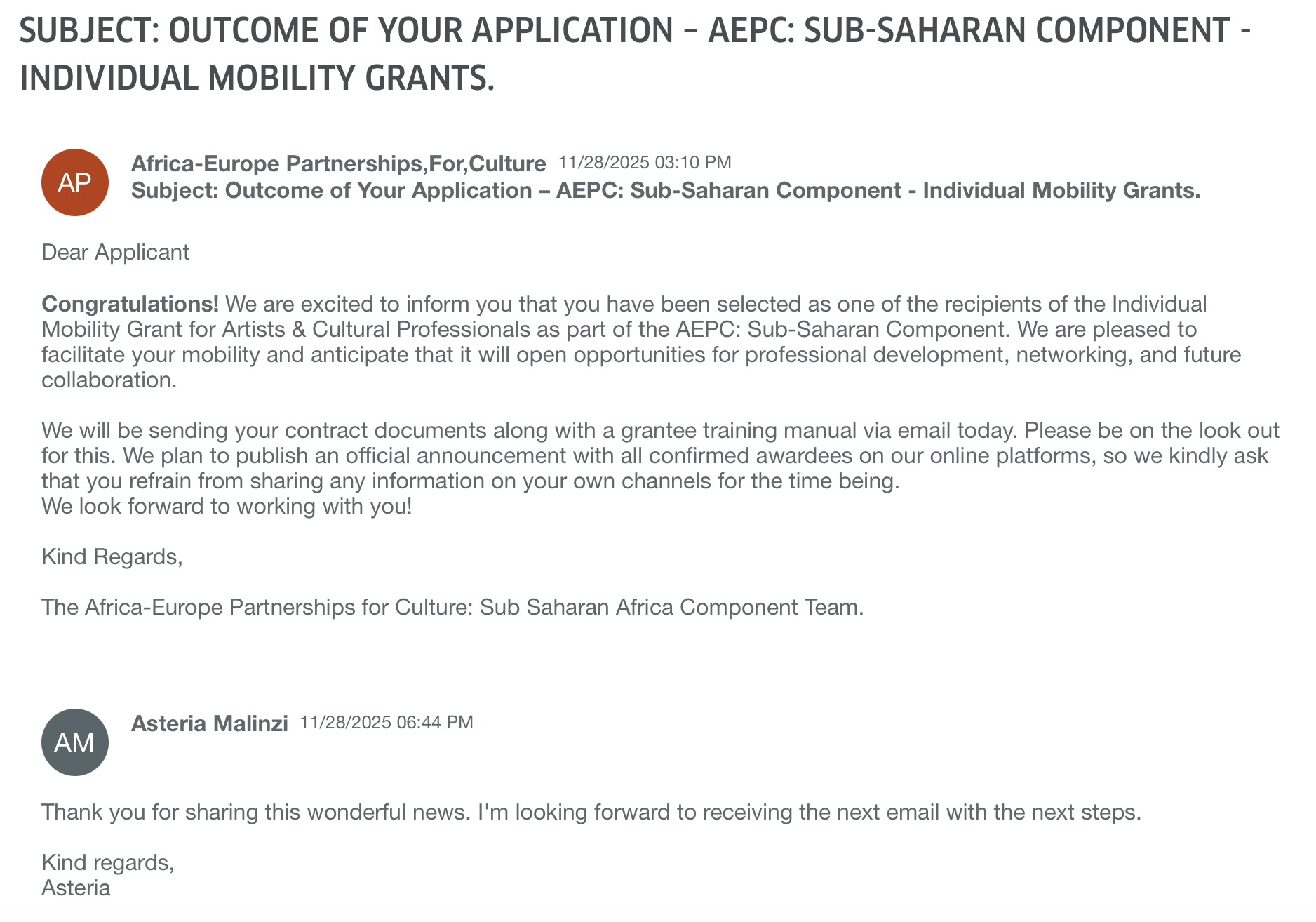
Confirmation Message from GAP Portal.
When I received confirmation that my application had been accepted, the feeling was one of pure, uncomplicated joy. The grant covered my flights, my accommodation in Venice, and my daily expenses throughout my stay. In practical terms, it removed the financial barrier that would otherwise have made this trip impossible at this point in my career. But its significance went far beyond logistics.
This opportunity came at exactly the right time, and it arrived with the weight of something long awaited.
The Significance of This Particular Biennale
Before I even walked into the Tanzanian Pavilion or set foot in the Arsenale, this year's Biennale already carried a particular meaning. The 61st edition is directed by Koyo Kouoh, a visionary curator and the first African woman ever to lead the Venice Biennale. That fact alone is historic. But what I witnessed on the ground in Venice went beyond symbolism. Her curatorial vision has placed African artists and perspectives at the very centre of one of the world's most watched cultural events, and the presence of African creative voices throughout the main exhibition halls was visible, substantial, and impossible to ignore.
This grant gave me something I did not expect: confirmation. Seeing Koyo Kouoh leading one of the world's greatest art exhibitions, and seeing so many African artists on that global stage, made what I am working towards feel not only possible but necessary. I arrived as an artist assistant and left with new relationships, new perspectives on what international curatorial practice looks like, and a much clearer vision for my own path forward. There are moments in a career when the direction you have chosen suddenly comes into sharp focus. Venice was that moment for me.
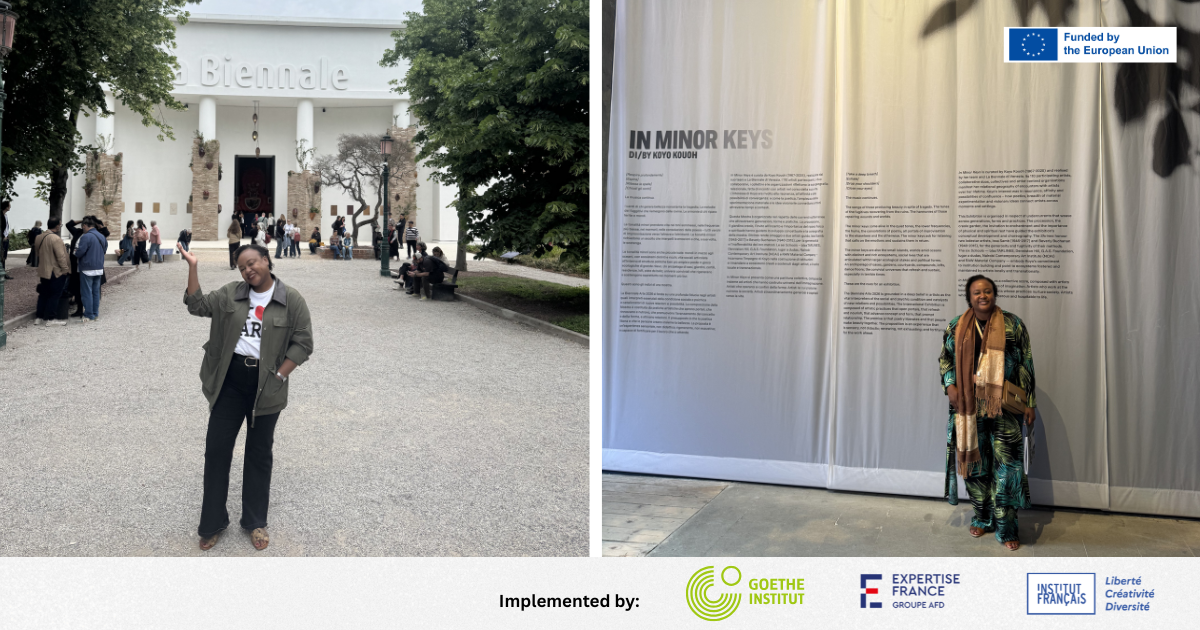
What Venice Gave Me
The experience of being in Venice for the Biennale has been genuinely life-changing, and I do not use that phrase lightly. As both an artist and a curator, I returned home carrying new knowledge, new relationships, and a fundamentally expanded sense of what is possible.
One of the most significant shifts happened in how I think about exhibition-making itself. In Tanzania, like in many contexts across the continent, we work within real financial constraints, and those constraints can sometimes narrow our sense of what an exhibition can be. Venice blew that open for me. I witnessed artists and curators working across materials, textures, sounds, and sensory experiences that I had not previously considered accessible. Exhibitions that asked audiences not just to look, but to touch, to smell, to feel, to engage with work through every sense available to them. I came home asking different questions about how I can create those kinds of layered, multifaceted experiences within our own context, and with the resources we have.
Beyond the art itself, the connections I made in Venice have opened doors I genuinely could not have reached from Dar es Salaam without being physically present. I met curators, artists, and cultural practitioners from across the world, and conversations that began in front of artworks have continued beyond Venice into possibilities for future collaboration, residency exchanges, and international projects.
I also had the rare and invaluable opportunity to observe curatorial practices and artistic statements from an enormous range of contexts, watching how artists communicate their work, how curators frame ideas for diverse global audiences, and how institutions of all sizes navigate the complex business of presenting art on a world stage. All of that learning now lives in my practice in ways that will continue to reveal themselves over time.
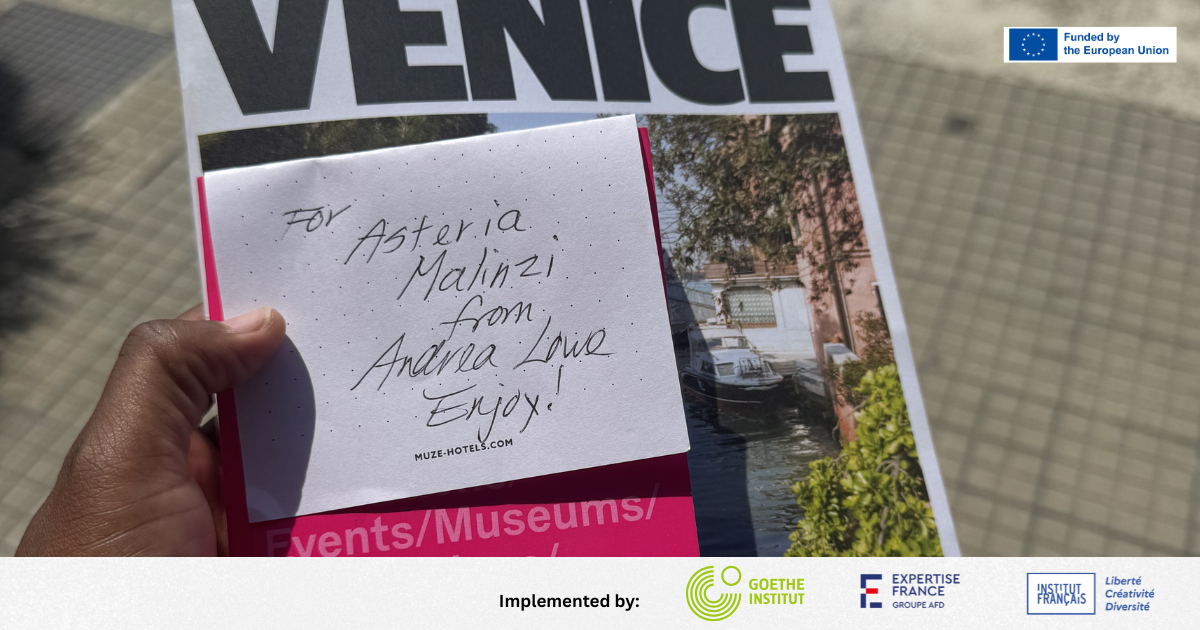
Gratitude and What Comes Next
I am deeply grateful to the Africa-Europe Partnerships for Culture programme, funded by the European Union and implemented by the Goethe-Institut, Expertise France and Institut français, for making this possible. A grant of this kind is not simply financial support. It is an act of belief in the value of African cultural practitioners being present in global conversations, not as observers from a distance, but as participants with expertise, perspective, and something genuinely important to contribute.
For anyone reading this who is an artist or cultural practitioner based in Sub-Saharan Africa and wondering whether to apply for an opportunity like this: please do. Step outside your comfort zone. Apply for the stages you dream of being part of. The research, the connections, and the clarity of vision that come from being present in rooms you have only imagined are worth more than I can adequately express.
Venice was a dream I had carried since 2015. The mobility grant made it real.
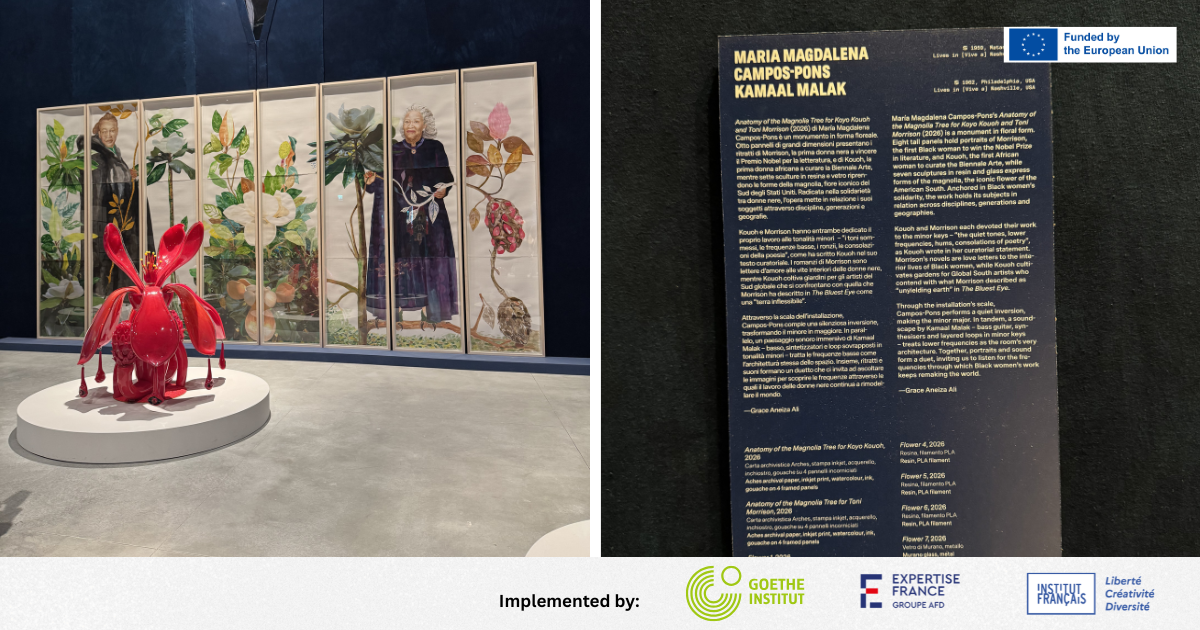
This mobility was supported by the Africa-Europe Partnerships for Culture: Sub-Saharan Africa, Connect and Create programme, funded by the European Union, implemented by the Goethe-Institut, Expertise France and Institut français.