I visited many pavilions in Venice. I walked through grand halls and intimate spaces, through work that impressed me and work that moved me. But there was one pavilion I kept going back to. Three times in total. And every single time, I felt it in my body.
The National Pavilion of India at the 61st Venice Biennale was, without question, my favourite pavilion of the entire Biennale.
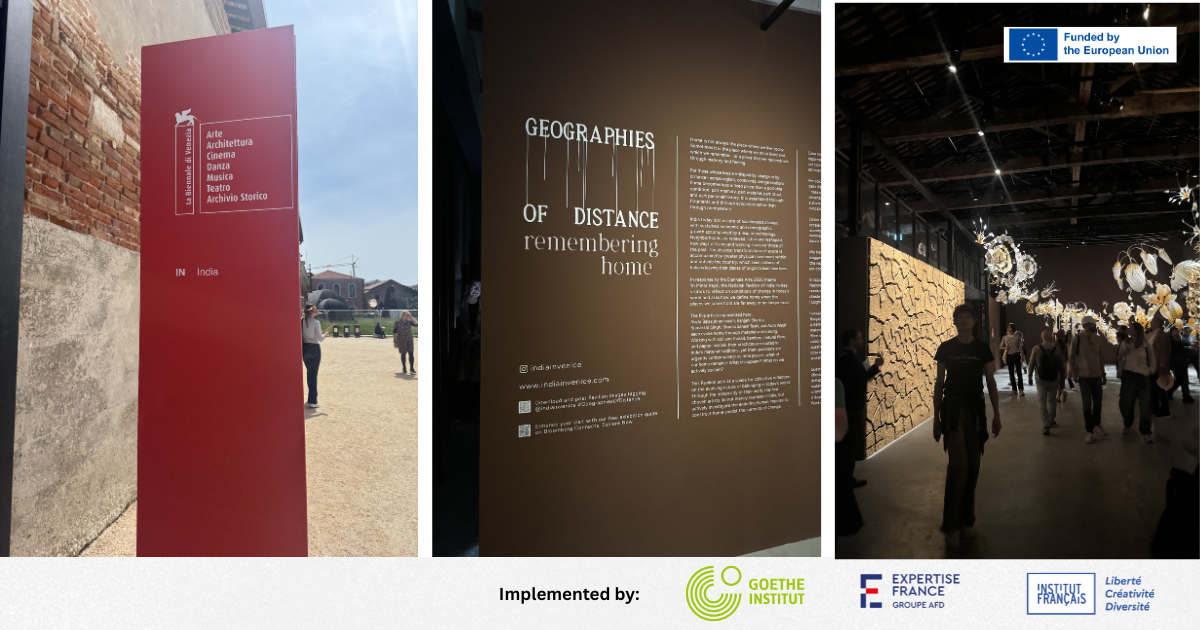
Indian National Pavilion at Arsenale, 61st La Biennale di Venezia, Venice, Italy
Geographies of Distance: Remembering Home
Curated by Dr Amin Jaffer, the pavilion, titled Geographies of Distance: Remembering Home, is presented in direct response to the Biennale's overarching theme, In Minor Keys, chosen by Artistic Director Koyo Kouoh. The curatorial premise is deceptively simple and deeply universal: in a world of accelerated change, where cities are reshaped, and millions of people leave their places of origin to lead new lives, how do we define home when the places we grew up in are far away, or no longer exist at all?
It is a question I did not expect to hit me as hard as it did. But it did.
The Work That Stopped Me
The work I could not stop thinking about was Permanent Address, 2026 by Sumakshi Singh. Born in New Delhi in 1980, Singh works with thread, textiles, and embroidery to create delicate, translucent environments that blur the boundary between architecture and memory. For this installation, she recreated the demolished family home at 33 Link Road, New Delhi, in silk, cotton, and nylon thread, recalling formative moments of her childhood. The walls, hinges, and brickwork of the house are rendered as spectral, lace-like outlines suspended in air, translucent and weightless, as if the building itself has become a memory you can walk through.
Singh describes how, though she lived across states and countries, her idea of home remained tethered to that one address. It was listed as the family's permanent address on official documents. It was where her grandfather died and where her mother was born. It was where the family gathered to knit and embroider together, a tradition that directly informs the material and labour of the work itself.
I stood in front of this piece, and I understood it immediately, not just intellectually, but in the way that certain works of art bypass your mind entirely and go straight to something older and quieter inside you. I have moved a great deal in my life. I know what it is not to have one place that has held you across the years. I know what it is to feel that the idea of home lives more in memory and people than in any fixed address. This work named that feeling with extraordinary precision and beauty.
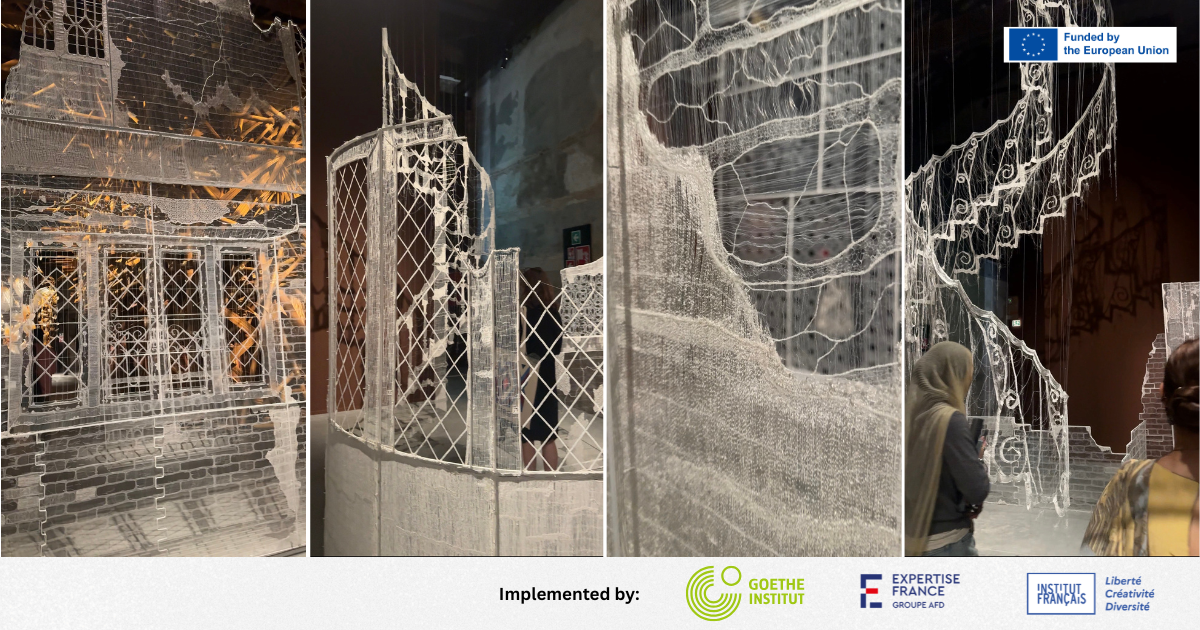
Permanent Address, 2026 by Sumakshi Singh
A Pavilion That Spoke in One Voice
What made the Indian Pavilion exceptional was not just any single work. It was the fact that all five artists, Sumakshi Singh, Alwar Balasubramaniam, Ranjani Shettar, Skarma Sonam Tashi, and Asim Waqif, were in genuine conversation with one another. Each brought a distinct material practice rooted in Indian domestic and architectural traditions, clay and soil, natural fibres, bamboo, papier-mache, thread and embroidery. Still, together they formed something cohesive and cumulative.
You moved through the space, and the works responded to each other. Singh's thread architecture of the family home sat in dialogue with works about gardens, about settlement, about the forms and textures of belonging. Asim Waqif's bamboo scaffolding rose from the floor to the ceiling in the same space, towering and intricate, leading you upward and onward through the pavilion. The experience was immersive and interactive in a way that felt natural rather than contrived.
As a curator, I found myself paying close attention to how Dr Jaffer had constructed this. He had found a theme, the relationship between home, distance, and memory, that was universal enough to hold five very different artistic voices without flattening any of them. Each artist had room to be fully themselves, and yet the pavilion felt like a single, breathing thing. That is genuinely difficult to achieve, and I have been thinking about it ever since.
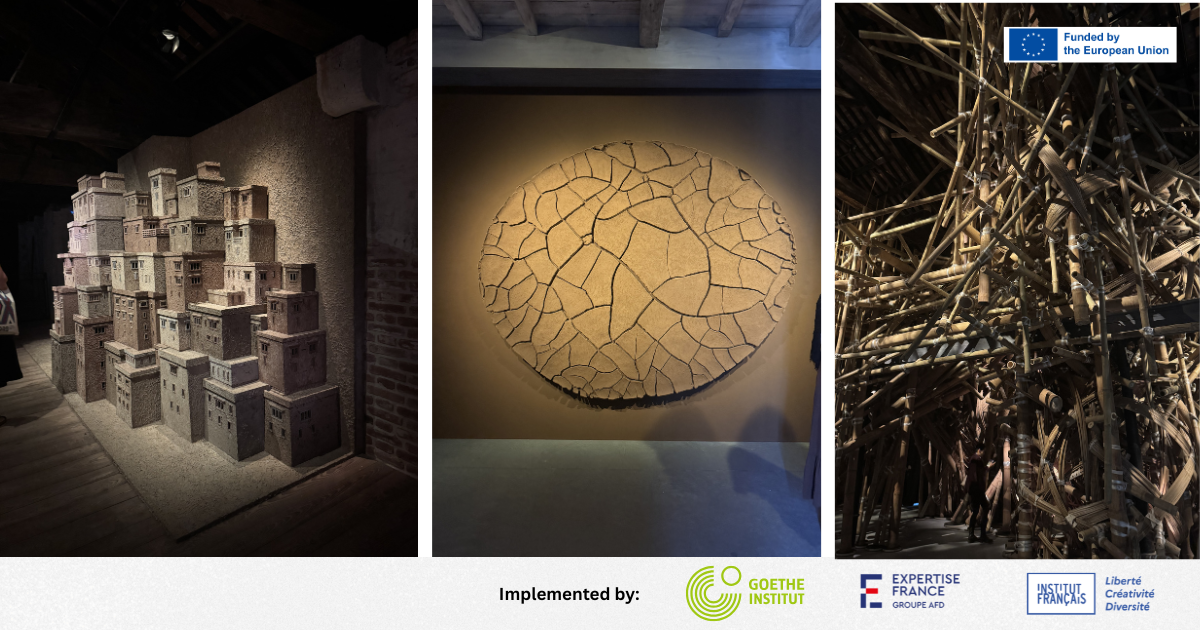
Left to right: Echoes of Home (2026) by Skarma Sonam Tashi, Drift (2026) by Alwar Balasubramaniam, and Chaal (2026) by Asim Waqif
Why I Kept Going Back
The first time I visited, I was moved. The second time, I noticed things I had missed. The third time, I almost cried.
I also sent at least five or six people to see this pavilion. Every time someone mentioned they were looking for a recommendation, this was the one I gave without hesitation.
There is a particular kind of art that does not just speak to your experience but expands it, that makes you feel less alone in something you had not quite found the language for. Permanent Address did that for me. The pavilion as a whole did that for me. It is the kind of work that stays with you long after you have left the room, the kind that changes, even slightly, how you see your own life and practice.
That, for me, is what the best art does. And the Indian Pavilion did it better than anywhere else I walked in Venice.
For more information on the National Pavilion of India at the 61st Venice Biennale, visit indiainvenice.com
This mobility was supported by the Africa-Europe Partnerships for Culture: Sub-Saharan Africa, Connect and Create programme, funded by the European Union, implemented by the Goethe-Institut, Expertise France and Institut français.